
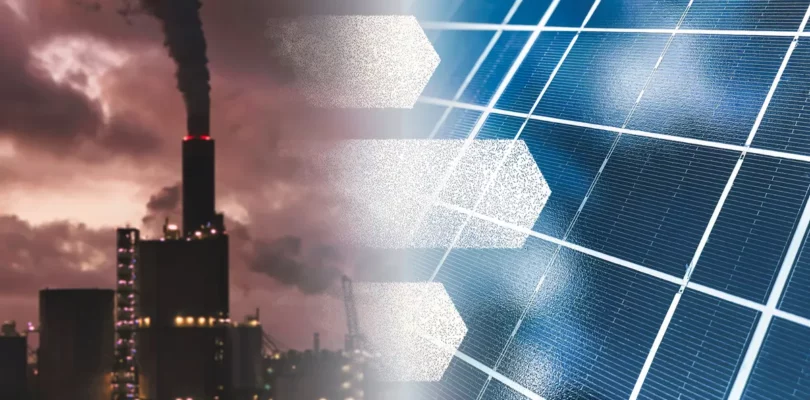
Why This Survey Matters Now
The global conversation around climate change is no longer limited to environmental groups or policymakers. It has fully entered the boardroom. According to a new annual survey conducted by the World Business Council for Sustainable Development (WBCSD), business leaders across the world are increasingly worried not just about climate change itself, but about how the transition to a low-carbon economy will unfold.
The central concern is not whether the world will transition to net-zero, but whether that transition will happen in a controlled, coordinated way—or in a disorderly, fragmented, and economically disruptive manner.
The findings reveal a growing sense of urgency, rising cost pressures, and a widening gap between perceived risk and actual preparedness.
A Growing Fear of a “Disorderly Transition”
At the core of the report is a striking statistic: 68% of business leaders believe a disorderly climate transition is more likely today than it was just one year ago.
A disorderly transition refers to a scenario where the shift toward a low-carbon economy happens in an uncoordinated way. Instead of gradual and predictable policy changes, businesses would face abrupt regulatory shifts, sudden price changes, supply chain instability, and potential social disruption.
This concern is not evenly distributed across regions. In North America, the fear is significantly higher—94% of executives expect such a scenario to be likely, highlighting regional differences in regulatory expectations and climate policy uncertainty.
What stands out is not only the level of concern, but its acceleration. Business leaders are not just worried—they increasingly believe the risk is growing.
Climate Risk Is Already a Cost Factor for Businesses
The survey shows that climate change is no longer a distant risk. It is already affecting corporate balance sheets.
Nearly half of respondents—47%—reported higher business costs over the past year directly linked to climate-related impacts. These include extreme weather events such as floods, droughts, heat waves, and water scarcity.
Looking forward, 49% expect these costs to increase even further within the next 12 months, suggesting that climate-related financial pressure is not stabilizing—it is intensifying.
The types of costs being reported are broad and interconnected. Companies cite supply chain disruptions, volatility in commodity and input prices, rising insurance premiums, physical damage to infrastructure, and even partial loss of coverage in high-risk regions.
More than half of respondents (54%) pointed specifically to supply chain disruptions as a key impact area, showing how climate risk is increasingly embedded in global logistics and production systems rather than isolated environmental incidents.
Nearly Universal Recognition of Climate Risk
One of the most striking findings in the report is the near consensus among business leaders on climate risk itself.
98% of executives say they view a disorderly transition as a risk to their business, and 40% describe it as either a “significant” or “critical” threat.
Despite this high awareness, preparedness remains low. Only 15% of companies say they are fully prepared to manage a disorderly climate transition.
This gap between awareness and readiness is one of the most important signals in the entire survey. It suggests that while companies understand the direction of change, many have not yet built the systems, strategies, or investments needed to withstand abrupt shifts.
Preference for Predictability Over Delay
When asked about policy direction, business leaders showed a clear preference for stability and long-term planning.
An overwhelming 85% prefer early or gradual policy changes, which allow companies to adjust over time, invest strategically, and avoid shock transitions. In contrast, only 4% prefer delaying action, a position that would increase the risk of abrupt future disruptions.
This indicates that businesses are not resisting climate policy—they are asking for consistency, coordination, and predictability.
Executives appear to favor structured transition pathways that reduce uncertainty rather than rapid or unpredictable policy swings.
Rising Investment Despite Rising Risk
Even as concerns grow, investment in climate-related initiatives continues to expand.
According to the survey, 89% of business leaders say they have either maintained or increased climate-related investments over the past year. This includes spending on clean energy, electrification, circular economy initiatives, and regenerative agriculture.
Additionally, 38% of companies have strengthened their climate targets in 2025, which is double the rate reported in the previous year’s survey. This suggests not just continuity, but acceleration in corporate climate ambition.
Many leaders also report that sustainability is becoming integrated into core business strategy rather than being treated as a standalone ESG initiative. The shift is driven less by reputational concerns and more by competitiveness, resilience, and long-term cost efficiency.
Sustainability as a Competitive Advantage
The survey highlights a significant shift in how executives view sustainability. 92% of leaders expect sustainability to become a source of competitive advantage within the next 5 to 10 years.
This reflects a broader transformation in corporate thinking. Sustainability is no longer framed primarily as compliance or corporate responsibility. Instead, it is increasingly seen as a strategic lever for growth, resilience, and market positioning.
When asked about motivations behind sustainability strategies, executives pointed to several key drivers:
Risk management and regulatory compliance remain the most common reason, cited by 52% of respondents.
Future growth opportunities follow closely at 46%.
In North America, customer demand plays a particularly strong role, with 68% of leaders identifying it as the primary driver of sustainability initiatives.
This regional difference suggests that market pressure, rather than regulatory pressure, may be accelerating sustainability adoption in certain economies.
Which Climate Solutions Are Becoming More Attractive
The survey also identifies which sectors and solutions are gaining momentum in corporate strategy.
Power generation and energy storage stand out, with 80% of executives reporting increased attractiveness over the past year. This reflects the growing importance of renewable energy infrastructure and grid modernization.
Similarly, 73% say investment in power transmission and grid systems has become more attractive, highlighting the need for large-scale infrastructure upgrades to support renewable energy integration.
Agricultural transformation is also gaining attention. 72% of respondents see regenerative agriculture as more attractive than a year ago, signaling increased awareness of food system resilience and land-use sustainability.
These trends show that climate strategy is increasingly tied to physical infrastructure and real economy transformation rather than abstract carbon accounting.
Policy Expectations: What Businesses Want From Governments
Despite strong private-sector investment, executives are clear that government action remains essential.
When asked about policy priorities, business leaders emphasized several key areas. Long-term policy frameworks were the most important, selected by 60% of respondents. This reflects a need for predictable regulatory environments that support long-term investment decisions.
Other priorities include supply-side incentives such as subsidies and tax benefits, investment in clean energy systems, and demand-side policies like mandates and consumer incentives.
Taken together, these responses suggest that businesses are not asking for less regulation—they are asking for better-structured regulation that reduces uncertainty and supports capital allocation.
The Role of International Cooperation
One of the strongest consensus points in the survey relates to global coordination.
89% of executives say international cooperation between governments on standards, certifications, and trade rules is important for enabling climate investment. Among North American leaders, this sentiment is even stronger, with 81% describing it as “extremely important.”
This reflects a key challenge in the global transition: climate investment is increasingly cross-border, but policy frameworks remain fragmented.
Without harmonized standards and predictable trade rules, companies face higher compliance costs and greater uncertainty, which can slow down investment decisions.
A Transition Defined by Risk and Opportunity
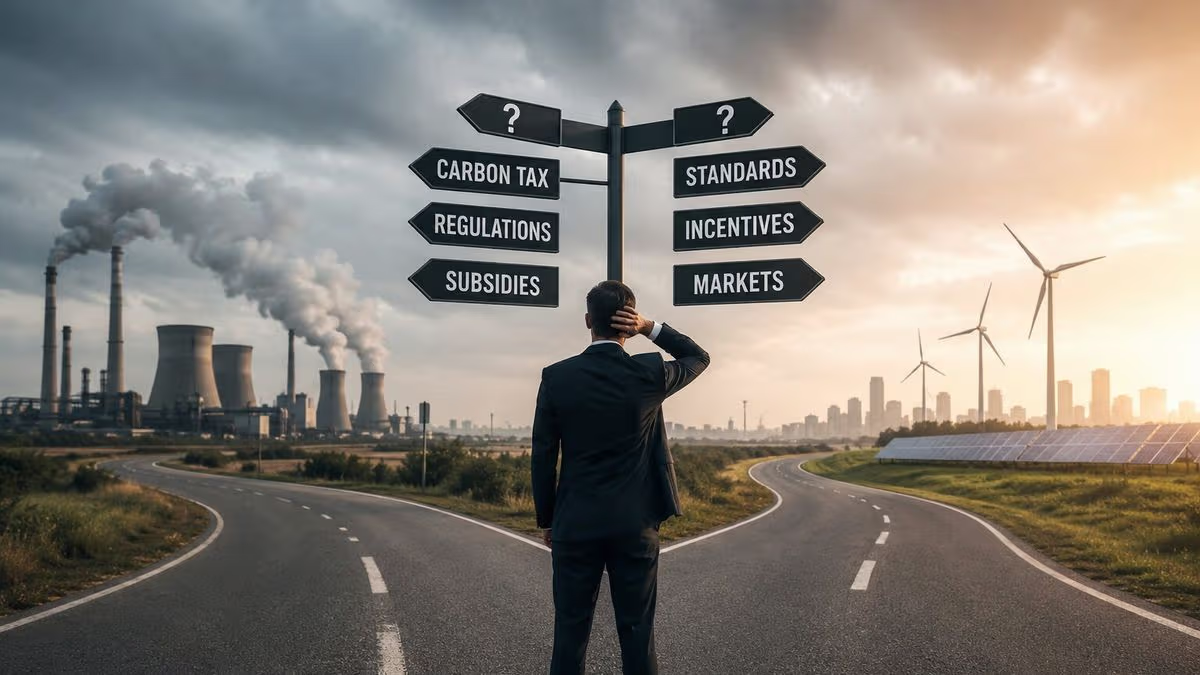
The WBCSD survey paints a complex picture of the global business landscape. On one hand, climate change is already driving measurable financial costs and operational disruption. On the other hand, companies are increasing investment and embedding sustainability into core strategy.
The dominant concern is not resistance to transition, but fear of disorder in how that transition unfolds.
Business leaders overwhelmingly support climate action, but they want it to be coordinated, predictable, and stable. Without that, they warn of rising costs, investment inefficiencies, and systemic risk across industries.
At the same time, the data shows that many companies see sustainability not as a burden, but as a competitive pathway for the next decade.
The future of the climate transition, according to business leaders themselves, will not be defined by whether it happens—but by how well it is managed.