
A Major Turning Point for a High-End EV Manufacturer
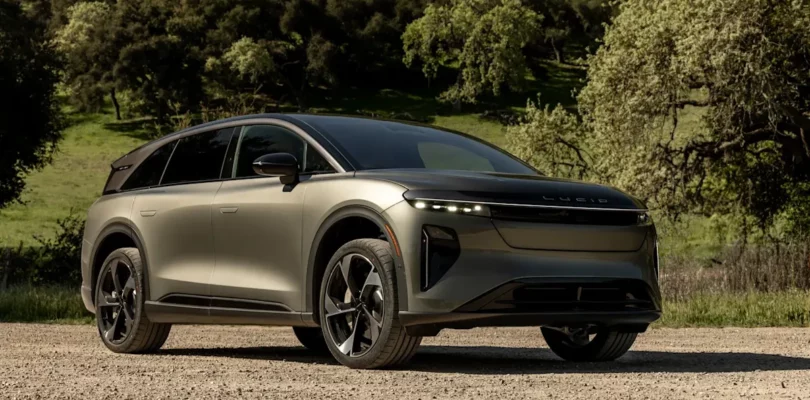
Lucid Motors, one of the most closely watched luxury electric vehicle manufacturers in the United States, has entered a major restructuring phase marked by large-scale job cuts and senior leadership changes. The company is laying off approximately 18% of its U.S. workforce, a move that underscores growing instability in parts of the electric vehicle market that once promised rapid and sustained expansion.
At the same time, the resignation of Chief Operating Officer Marc Winterhoff adds further uncertainty to the company’s internal structure, signaling that Lucid is not only adjusting costs but also reshaping its executive leadership during a period of operational stress.
The company framed the changes as necessary adjustments to match production with weakened demand, reduce excess inventory, and improve long-term efficiency. However, the scale of the cuts reflects deeper structural challenges facing both Lucid specifically and the broader EV sector.
Why Lucid Is Under Pressure: Cooling Demand and Market Reality
The electric vehicle industry has entered a noticeably different phase compared to the early years of rapid expansion. Demand growth has slowed, competition has intensified, and consumer adoption patterns are becoming more selective.
Lucid, which positions itself in the premium segment of the EV market, has been particularly exposed to these shifts. Luxury EV buyers represent a smaller, more sensitive segment of the market, often influenced by economic conditions, interest rates, and broader consumer confidence.
Key pressures affecting Lucid include:
- Slower-than-expected EV adoption in key markets
- Strong competition from Tesla and legacy automakers
- High production costs for premium vehicles
- Limited economies of scale compared to larger manufacturers
- Ongoing cash burn and delayed path to profitability
These factors have forced the company to reassess its growth assumptions and scale back production expectations.
Workforce Reductions Across Key U.S. Facilities
The layoffs will significantly affect Lucid’s U.S. operations, especially its manufacturing base in Arizona and its corporate headquarters in California.
Arizona Manufacturing Impact
At its Casa Grande facility, Lucid has already reduced production capacity and eliminated a second production shift. This facility is central to the company’s EV assembly operations, meaning workforce reductions there directly impact output capabilities.
Employees affected include both hourly production workers and salaried staff involved in manufacturing, logistics, and operational support. The restructuring is designed to better align output with current sales volumes and prevent excess inventory accumulation.
California Headquarters Cuts
Additional layoffs are expected at the Newark, California headquarters, where administrative, engineering, and corporate roles are concentrated. These cuts reflect an effort to streamline organizational layers and reduce overhead costs across non-manufacturing divisions.
Lucid has stated that affected employees will receive severance packages, benefits support, and transition assistance, though the long-term impact on workforce morale and institutional knowledge is expected to be significant.
Leadership Changes Add to Organizational Instability

The departure of Chief Operating Officer Marc Winterhoff marks another major shift in Lucid’s leadership structure. His exit coincides with the elimination of the COO role entirely, suggesting a broader reorganization of executive responsibilities.
Winterhoff’s tenure occurred during a turbulent period for the company, including previous transitions in the CEO role. Lucid has experienced multiple leadership changes within a short time frame, reflecting ongoing strategic uncertainty.
Recent leadership timeline highlights:
- Resignation of former CEO and CTO Peter Rawlinson
- Temporary leadership transition under Winterhoff
- Appointment of new CEO Silvio Napoli
- Elimination of COO position and restructuring of executive team
Frequent executive turnover can create challenges in long-term planning, investor confidence, and operational consistency, especially in capital-intensive industries like automotive manufacturing.
Financial Strain and Operational Losses
Lucid continues to face significant financial pressure as it works toward scaling production while attempting to reduce losses.
Key financial challenges include:
- Multi-billion-dollar annual operating losses
- High capital expenditure requirements for manufacturing expansion
- Limited vehicle delivery volumes compared to expectations
- Continued reliance on external funding and strategic investors
Despite maintaining liquidity reserves projected to support operations into the next phase of development, the company has yet to achieve positive cash flow or profitability.
The layoffs are expected to generate restructuring costs, including severance payments and transition expenses, amounting to tens of millions of dollars.
Production Adjustments and Inventory Control Strategy
One of the main drivers behind the layoffs is production alignment. Lucid has acknowledged that earlier production assumptions outpaced actual demand, leading to inefficiencies and inventory pressure.
To correct this imbalance, the company has implemented:
- Reduced shift operations at its main Arizona plant
- Lower short-term production targets
- Revised inventory management strategies
- More conservative forecasting models
These adjustments are intended to stabilize operations, but they also signal a clear shift away from aggressive scaling toward controlled production discipline.
Robotaxi Expansion and Strategic Partnerships
Despite internal restructuring, Lucid continues to pursue long-term growth strategies in the autonomous mobility and ride-hailing sectors.
A key element of this strategy is its partnership with Uber Technologies, which includes plans for large-scale deployment of Lucid vehicles as robotaxis across multiple global markets.
The agreement includes:
- Investment commitments totaling hundreds of millions of dollars
- Plans for tens of thousands of vehicles integrated into ride-hailing networks
- Expansion into multiple international markets over several years
- Development of autonomous and semi-autonomous mobility platforms
Lucid has also showcased prototype robotaxi concepts, signaling its intention to diversify beyond traditional consumer vehicle sales and enter fleet-based mobility markets.
This shift reflects a broader industry trend where EV manufacturers seek recurring revenue streams beyond one-time vehicle sales.
Heavy Dependence on External Investment
Lucid’s financial structure is heavily supported by external investors, particularly Saudi Arabia’s Public Investment Fund (PIF), which owns a controlling stake in the company.
Key investment details include:
- Approximately 60% ownership held by PIF and affiliated entities
- Multi-billion-dollar cumulative capital injections
- Additional convertible stock purchases in recent funding rounds
- Strategic manufacturing presence in Saudi Arabia
This level of sovereign backing provides financial stability, but it also places Lucid within broader geopolitical and strategic investment frameworks that extend beyond traditional automotive market dynamics.
EV Industry Slowdown: A Wider Structural Shift
Lucid’s situation is not isolated. Across the electric vehicle industry, manufacturers are experiencing a transition from rapid expansion to consolidation and efficiency-driven restructuring.
Industry-wide trends include:
- Slower-than-expected global EV demand growth
- Increased price competition and margin compression
- Supply chain normalization after pandemic-era disruptions
- Greater focus on profitability rather than production volume
- Consolidation among smaller or less profitable EV startups
Many companies that once prioritized rapid scaling are now shifting toward cost control, operational efficiency, and selective market expansion.
Strategic Outlook: From Expansion to Survival Mode
Lucid Motors is now operating in a fundamentally different environment than the one in which it was founded. Early expectations of exponential EV adoption have given way to a more cautious and competitive reality.
The company’s current strategy reflects a dual approach:
- Short-term: Cost reduction, workforce optimization, and production alignment
- Long-term: Investment in autonomous mobility, partnerships, and premium brand positioning
Whether this strategy succeeds will depend on Lucid’s ability to manage cash flow, stabilize production, and convert strategic partnerships into sustainable revenue.
Conclusion: A Defining Moment for Lucid and the EV Sector
The 18% workforce reduction and leadership reshuffle represent more than a corporate restructuring—they signal a broader recalibration in the electric vehicle industry.
Lucid Motors is transitioning from an aggressive growth-stage startup into a company focused on survival, efficiency, and strategic repositioning. While long-term opportunities in EVs and autonomous mobility remain significant, the path forward is far more constrained and competitive than originally expected.
This moment may ultimately define whether Lucid emerges as a durable premium EV brand—or becomes another example of the high cost of scaling too quickly in a rapidly evolving industry.