
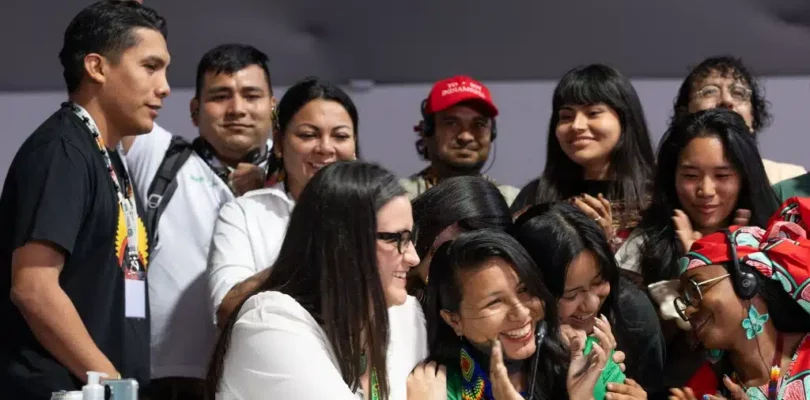
A system that decides without those most affected
Trust in political systems has been eroding for years, and in many parts of the world it is now at historic lows. Large portions of the population feel that decisions shaping their daily lives are made far away from their realities, often by institutions that respond slowly to crises and rarely reflect the lived experience of ordinary communities.
This disconnect becomes even more visible in climate governance. Policies are frequently designed through technical frameworks, economic modeling, and international negotiations that involve governments, corporations, and expert bodies. While these actors play an important role, the structure leaves limited space for the people who are already dealing with the direct consequences of environmental change.
As a result, climate policy often looks coherent on paper but fragmented in practice. Communities facing droughts, floods, land degradation, and food insecurity frequently experience adaptation not as a planned transition, but as constant crisis management.
The gap between expertise and lived experience
One of the core tensions in the climate debate is the assumption that expertise alone is sufficient to solve complex environmental problems. Scientific research, economic forecasting, and policy analysis are essential tools, but they do not fully capture how environmental change unfolds on the ground.
In many regions, especially where ecosystems are tightly linked to cultural and subsistence practices, environmental knowledge is not purely academic. It is embedded in generations of observation, adaptation, and survival. When governance systems exclude that knowledge, they lose access to a critical layer of understanding.
This gap is not abstract. It directly affects outcomes in agriculture, water management, disaster preparedness, and land use. In practice, it means that some of the most relevant insights are often left outside the room where decisions are made.
La Guajira and the Wayúu experience
A clear example of this disconnect can be found in La Guajira, a desert region in northern South America. It is home to more than 400,000 members of the Wayúu people, one of the largest Indigenous communities in the region.
Life in La Guajira is shaped by harsh environmental conditions, including prolonged droughts and irregular rainfall. These pressures have intensified in recent years, contributing to severe food insecurity. According to United Nations estimates, more than two-thirds of the Wayúu population faces challenges in accessing adequate nutrition, and child mortality linked to malnutrition is significantly higher than national averages.
Despite these difficulties, the Wayúu maintain a deeply rooted system of governance and environmental stewardship known as Ley Wayúu. This ancestral framework guides community decision-making, conflict resolution, and the sustainable use of land and resources. It is not a symbolic tradition but a functioning governance system that has evolved over centuries.
Within this system lies a different understanding of sustainability—one that is based not on abstract targets, but on long-term balance between people, land, and climate variability.
Indigenous knowledge in global climate discussions
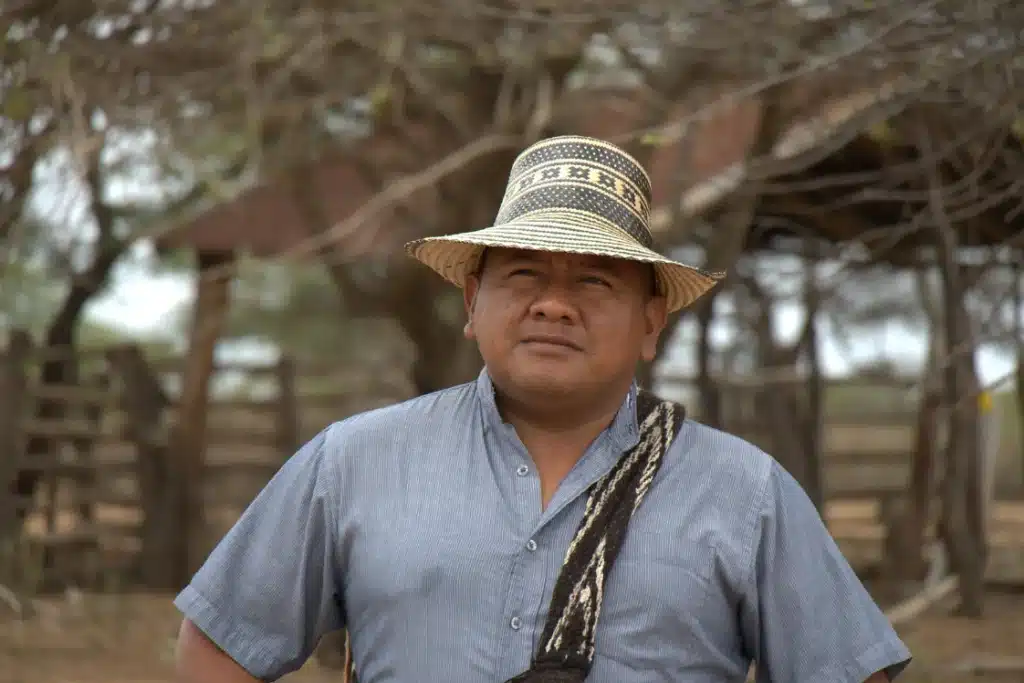
Indigenous leaders are increasingly bringing these perspectives into international spaces. One such voice is Abraham Jayariyu, a Wayúu leader who participated in a global citizens’ assembly focused on food systems and climate change.
The assembly brought together more than a hundred participants from diverse backgrounds, selected to reflect global demographic and social diversity. The idea behind such assemblies is simple: instead of limiting decision-making to political elites or technical experts, ordinary people are brought together to deliberate on complex issues after receiving balanced information from specialists.
Participants learn, debate, and refine proposals collectively before presenting recommendations for policy consideration.
For Indigenous participants like Jayariyu, the process is not about replacing traditional knowledge with external frameworks. Instead, it creates a space where different systems of understanding can coexist and interact.
He emphasized the importance of ancestral knowledge, particularly in how communities have historically managed land under changing environmental conditions. At the same time, he engaged with perspectives from other participants, creating a dialogue between lived experience and scientific or institutional knowledge.
Citizens’ assemblies as an alternative governance model
Citizens’ assemblies have gained attention in recent years as a response to political gridlock and declining public trust. Unlike traditional policymaking structures, they rely on random selection rather than elections or appointments, aiming to reflect a more accurate cross-section of society.
Once convened, participants are given access to expert testimony, data, and facilitated discussion. The goal is not to replace governments but to complement them with structured public deliberation.
This model has already been tested in several countries. In some cases, assemblies have influenced major policy changes, particularly in areas where governments previously struggled to reach consensus. Their strength lies not in authority, but in legitimacy: decisions are seen as more credible because they emerge from collective reasoning rather than partisan negotiation alone.
Importantly, when tested against broader public opinion, recommendations from citizens’ assemblies often maintain strong levels of support, suggesting that deliberative processes can produce outcomes that resonate beyond the group itself.
What Indigenous participation changes
When Indigenous voices are included in these processes, the impact goes beyond representation. It introduces entirely different ways of understanding land, climate, and responsibility.
Many Indigenous governance systems are built around long time horizons, sometimes spanning generations. This contrasts with political cycles that often prioritize short-term results. Indigenous perspectives also tend to emphasize relational thinking—seeing ecosystems not as resources to be extracted, but as interconnected systems requiring balance.
In practical terms, this can shift how policies are designed. Food systems, for example, are not treated solely as industrial supply chains but as ecological and cultural networks. Land management becomes not just a technical problem but a social and ethical one.
These differences matter because food systems alone account for a significant share of global greenhouse gas emissions. Any serious attempt to address climate change must therefore engage with the ways food is produced, distributed, and governed.
Legitimacy, trust, and political failure
A deeper issue underlying the climate crisis is not only environmental, but institutional. Many communities feel excluded from decision-making processes that directly affect them. Over time, this erodes trust in governments and international institutions.
When people perceive that decisions are made without their input, legitimacy weakens. This can lead to resistance, disengagement, or skepticism toward climate policies, even when those policies are scientifically sound.
Citizens’ assemblies and Indigenous participation address this problem by changing who gets to speak and be heard. They do not eliminate conflict or disagreement, but they create structured environments where different forms of knowledge are treated as valid inputs rather than competing hierarchies.
The challenge ahead
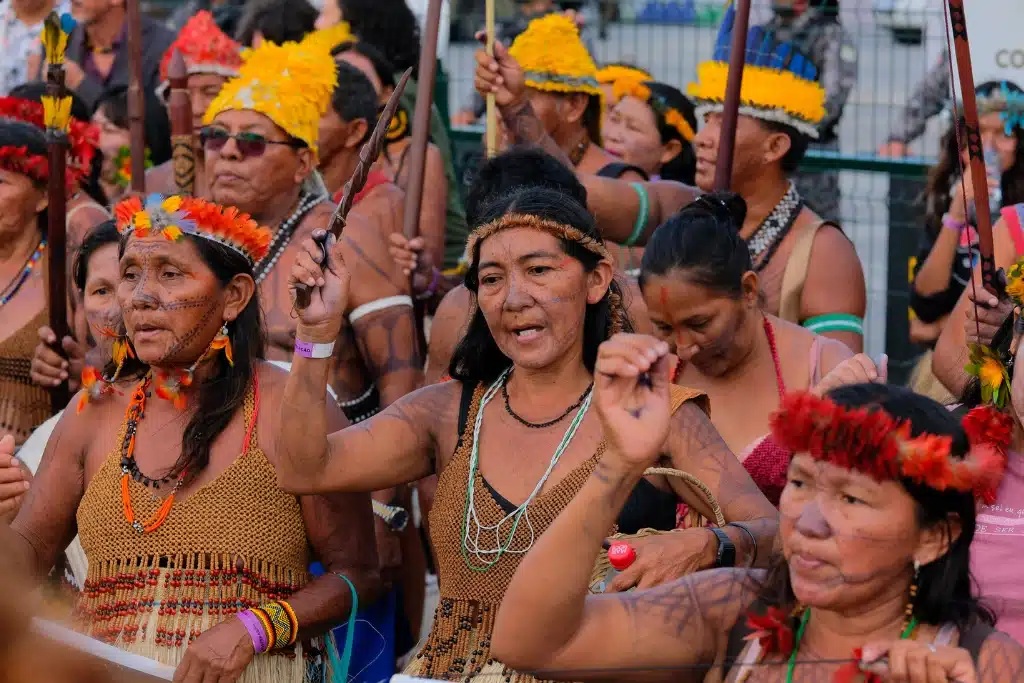
Despite growing interest in participatory governance, major barriers remain. Institutional inertia, political resistance, and uneven access to decision-making platforms continue to limit meaningful inclusion. In many cases, Indigenous knowledge is still treated as supplementary rather than foundational.
Yet the urgency of the climate crisis leaves little room for exclusionary systems. As environmental pressures intensify, the gap between policy design and lived reality becomes more costly.
What emerges from experiments like citizens’ assemblies is not a perfect solution, but a direction of change: governance that is more distributed, more participatory, and more reflective of the diversity of human experience.
Rethinking authority in climate action
Ultimately, addressing climate change is not only about technology, finance, or regulation. It is also about who is considered credible, whose knowledge is valued, and who is included in shaping the future.
Indigenous communities, including the Wayúu, are not peripheral to this discussion. They are central to it, because they often inhabit the regions where climate impacts are most immediate and most severe.
Bringing these voices into decision-making does more than improve representation. It expands the range of solutions available. And in a crisis defined by complexity and urgency, that expansion may be one of the most important steps forward.